
Vivo X300 Ultra Review: Is This the Ultimate Camera Phone?
408 views
You know the frustration. You spot a perfect sunset, a street performer, or a child running across a field, pull out a supposedly “flagship” phone, and the result looks soft, overprocessed, or strangely flat.
The Vivo X300 Ultra takes a very different approach.
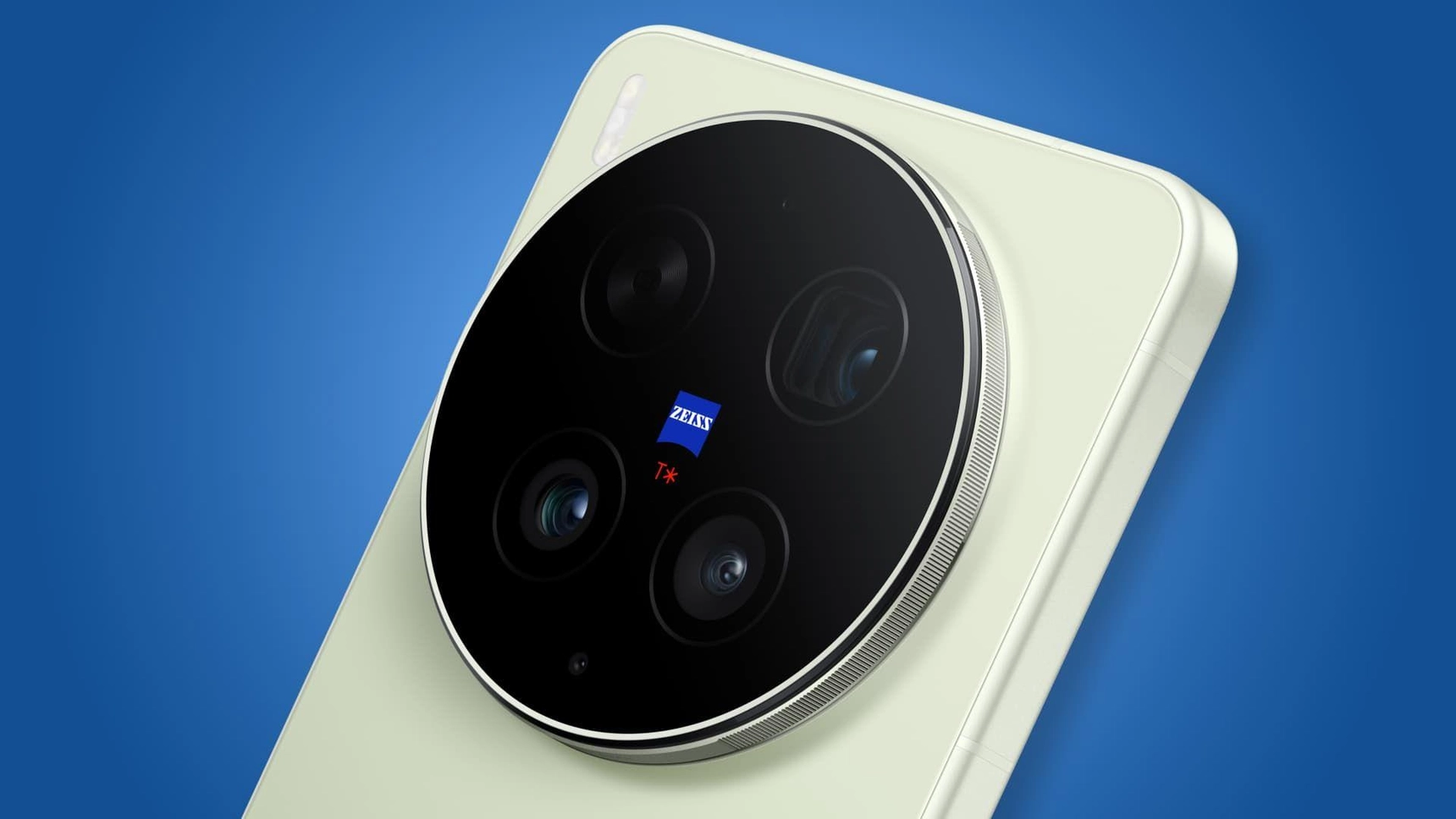
This isn't a phone that simply adds another high-megapixel camera and calls it a day. Its entire identity revolves around imaging hardware: a 200MP 35mm main camera, a 200MP 85mm telephoto, a 50MP ultra-wide, dedicated imaging processing, professional video formats, and optional telephoto extenders reaching a 400mm equivalent focal length.
That's serious hardware.
But serious hardware can also mean serious compromises. The X300 Ultra is large, heavy, and built around a camera system that can become even bulkier if you buy into Vivo's accessories.
So, is this really the ultimate camera phone? After digging through Vivo's official specifications, regional launch information, and the practical implications of its unusually ambitious camera setup, the answer is more interesting than a simple yes or no.
A camera phone that actually thinks like a camera
Most smartphone camera systems are built around a familiar formula: one main lens, one ultra-wide, one telephoto, then plenty of computational photography to bridge the gaps.
Vivo has gone in another direction.
The X300 Ultra uses three large, stabilized ZEISS-branded rear cameras:
Camera | Sensor and Resolution | Equivalent Focal Length | Aperture |
|---|---|---|---|
Ultra-wide | Sony LYTIA 818, 50MP, 1/1.28-inch | 14mm | f/2.0 |
Main | Sony LYTIA 901, 200MP, 1/1.12-inch | 35mm | f/1.85 |
Telephoto | Samsung HP0, 200MP, 1/1.4-inch | 85mm | f/2.67 |
Vivo also rates all three cameras for optical stabilization, with claimed CIPA ratings of 6.0 for the ultra-wide, 6.5 for the 35mm camera, and 7.0 for the telephoto. The 85mm module adds 3-degree optical stabilization and supports 60fps autofocus tracking for moving subjects.
That combination matters because the X300 Ultra isn't forcing one giant main sensor to handle everything.
You get three deliberately chosen focal lengths.
14mm is for architecture and landscapes.
35mm is a classic documentary and street-photography perspective.
85mm is where portraits, stage photography, and compressed landscapes become much more interesting.
The 35mm choice is particularly refreshing.
For years, smartphone makers have treated roughly 23–24mm as the default “main camera” view. It works. It's flexible. It also tends to make people look slightly distorted when you get close.
A native 35mm perspective feels more intentional.
For travel photography, environmental portraits, street scenes, and everyday storytelling, it's arguably closer to how many photographers naturally frame a scene. Vivo calls this its “Documentary Camera,” and the positioning makes sense.
The 200MP numbers aren't the whole story
Let's get one thing straight: 200MP doesn't automatically mean every image you take will be a 200MP masterpiece.
Pixel count is only one part of the equation.
Sensor size, lens quality, stabilization, autofocus, image processing, dynamic range, and motion handling often matter more in real-world shooting. A phone can technically capture enormous files and still produce unpleasant sharpening or smeared textures.
Vivo appears to understand that problem.
The X300 Ultra combines its sensors with the VS1+ Pro Imaging Chip, a dedicated imaging processor built on a 6nm process. Vivo says the chip can process RAW image data before the main system-on-chip handles the rest of the imaging pipeline, with a quoted capability of up to 80 TOPS.
That sounds like marketing. Some of it inevitably is.
Still, the architecture is interesting because modern smartphone photography increasingly depends on specialized processing. The phone isn't simply capturing one frame and saving it. Exposure stacking, motion detection, noise reduction, autofocus tracking, HDR, color processing, and sharpening all happen inside a fraction of a second.
The X300 Ultra's challenge will be consistency.
A great camera phone shouldn't only produce a spectacular image once every twenty attempts. It should deliver predictable results when you're shooting a moving pet indoors, a concert under colored lights, or a sunset where the sky is bright and the foreground is nearly black.
That's where Vivo's hardware has the potential to separate itself.
The telephoto system is where things get slightly ridiculous
In a good way.
The native telephoto camera sits at an 85mm equivalent focal length, but Vivo also offers two external ZEISS telephoto extenders.
The lighter Gen 2 extender weighs 153g and provides a 200mm equivalent focal length using 2.35x magnification.
Then there's the monster.
The Gen 2 Ultra weighs 248g, uses a Kepler optical structure with 14 lens elements plus one glass-molded element, and extends the system to a claimed 400mm equivalent focal length.
This isn't something you'll casually keep in your jeans pocket.
And that's exactly the point.
At this stage, Vivo is no longer pretending that every photographer has identical needs. The phone works as a normal flagship, but the accessory system lets enthusiasts turn it into something closer to a compact modular camera.
There is friction, though.
You need to carry the extender. Attach it. Keep the optics clean. Use the correct case and mounting hardware. The larger 400mm unit weighs more than many compact cameras' lenses.
Miss a shot while attaching it? That can happen.
For wildlife, motorsports, concerts, or travel photography where you know what you're heading into, the system could be genuinely useful. For spontaneous family photos at a restaurant, it would be absurd.
Simple as that.
Video specs that finally look serious
Still photography gets most of the attention, but the X300 Ultra's video capabilities may be just as important.
Vivo lists multi-focal-length 4K recording at 120fps with 10-bit Log, 4:2:2 color, APV codec support, ACES integration, and 3D LUT monitoring. Dolby Vision recording at up to 4K/120fps is also part of the package.
That opens up a much more advanced workflow.
A creator can record Log footage, transfer it into software such as DaVinci Resolve, apply an appropriate LUT, and grade footage alongside material from larger cameras using an ACES-managed workflow.
That's not the same as simply adding a cinematic filter in an editing app.
The difference matters.
Log footage preserves a flatter tonal image specifically designed for post-production. 10-bit recording provides substantially more tonal precision than standard 8-bit footage, reducing the likelihood of visible banding during aggressive color adjustments.
There is a catch: storage.
High-bitrate 4K/120fps footage can consume storage surprisingly quickly. Buyers planning to shoot extended video projects should think seriously about the 512GB or 1TB versions rather than assuming 256GB will be enough.
According to Vivo's China pricing, the X300 Ultra starts at CNY 6,999 for 12GB/256GB, rising to CNY 7,499 for 12GB/512GB and CNY 7,999 for 16GB/512GB. The 16GB/1TB satellite communication version is listed at CNY 8,999, while the 16GB/1TB Photographer Kit is listed at CNY 11,999. Vivo launched the model in China in March 2026.
Regional pricing and availability will vary.
The screen and performance aren't afterthoughts
A camera-focused flagship still needs enough horsepower to process massive images and edit video without turning into a hand warmer.
The X300 Ultra uses Qualcomm's Snapdragon 8 Elite Gen 5 platform, with a 4.6GHz maximum CPU clock, an Adreno 840 GPU, and a 3nm manufacturing process listed in Vivo's official specifications.
The display is equally ambitious: a 6.82-inch 3168 × 1440 panel with adaptive refresh rates from 1Hz to 144Hz, 100% P3 color coverage, 1.07 billion colors, and up to 4,500 nits of claimed local peak brightness.
For photographers, the 2K resolution isn't just a spec-sheet trophy.
A large, color-focused display makes reviewing focus, exposure, and fine detail easier before you've left the location. Anyone who has discovered blurry photos only after importing them to a laptop will understand why that matters.
The downside is obvious.
This is a big phone.
Vivo lists the X300 Ultra at 162.98mm tall and 76.81mm wide. Depending on the color variant, it measures 8.19mm or 8.49mm thick and weighs 232g or 237g. Add a protective case or imaging accessories and you're carrying a substantial piece of hardware.
One-handed use won't be elegant.
Battery life looks promising, but shooting is different from browsing
Vivo has equipped the phone with a 6,600mAh battery, 100W wired charging, and 40W wireless charging. The company also claims up to 38.8 hours of YouTube playback under its test conditions.
That's encouraging.
But camera use is brutal.
Continuous 4K/120fps recording, 60fps subject tracking, screen brightness in direct sunlight, GPS, mobile data, and image processing can drain a battery much faster than a controlled video-playback benchmark.
The good news is that the optional imaging grip includes its own 2,300mAh battery. Vivo says some advanced grip functions will be enabled through an OTA update, so buyers should check their installed software version rather than assuming every advertised control works immediately out of the box.
That little detail is worth paying attention to.
Accessory-dependent features that arrive later through software updates can be excellent once mature, but early adopters sometimes end up waiting for the complete experience.
So, is it the ultimate camera phone?
For the right person, it might be closer than almost anything else.
The X300 Ultra isn't trying to be the lightest, simplest, or most universally convenient flagship. It is built for people who actually care about focal lengths, stabilization, color science, RAW workflows, telephoto reach, and video grading.
Its biggest strengths are easy to identify:
A genuinely unusual trio of large, stabilized camera sensors
Native 35mm and 85mm perspectives instead of relying entirely on digital crops
Two 200MP cameras with different photographic purposes
Optional 200mm and 400mm optical telephoto extenders
4K/120fps 10-bit Log, 4:2:2, Dolby Vision, LUT monitoring, and ACES workflow support
A 6,600mAh battery with 100W wired and 40W wireless charging
The compromises are just as real.
It is heavy. The accessory ecosystem adds even more bulk. Professional video will eat storage. Some advanced accessory functions depend on OTA software updates. And buyers outside Vivo's primary markets should carefully verify local availability, warranty coverage, network compatibility, and software support before importing one.
Vivo X300 Ultra FAQ
Is the Vivo X300 Ultra better than a dedicated camera?
Not universally. A dedicated mirrorless or DSLR system still offers interchangeable lenses, larger sensors, stronger ergonomics, and more specialized controls. The X300 Ultra's advantage is that its advanced camera system is always attached to a powerful connected computer in your pocket.
Does the Vivo X300 Ultra have real optical zoom?
Yes. The native 85mm telephoto provides a 3.7x optical zoom rating in Vivo's official China specifications. Optional ZEISS telephoto extenders push the system to 200mm and 400mm equivalent focal lengths.
Can the X300 Ultra shoot professional video?
It has unusually strong specifications for mobile production, including multi-focal 4K/120fps 10-bit Log recording, 4:2:2 support, Dolby Vision, 3D LUT monitoring, and ACES integration. A serious workflow will still require fast storage management and capable editing software.
Which storage version should photographers buy?
The 512GB model is a safer starting point for frequent high-resolution photography. Heavy 4K/120fps video shooters should strongly consider 1TB, particularly if they travel or work away from regular backup storage.
Is the Vivo X300 Ultra worth buying for casual users?
Probably not purely for its camera hardware. A casual user may get more value from a smaller flagship with stronger local support. The X300 Ultra makes the most sense when its advanced camera system is something you'll actually use.
The X300 Ultra feels like a sign of where premium camera phones are heading: less obsessed with adding another AI filter, more interested in giving photographers real hardware choices. If you're considering one, don't just compare megapixels—compare the focal lengths you shoot most, the storage your video workflow requires, and whether you'd genuinely carry the telephoto accessories. That's where the buying decision gets real.
Vivo X300 Ultra review
best camera phone
Vivo flagship 2026
smartphone camera review
Android flagship phone
Found this helpful? Share it!