
Under-Display Face ID Could Finally Remove the iPhone Dynamic Island
295 views
The Dynamic Island is clever. It’s also still a hole in your screen.
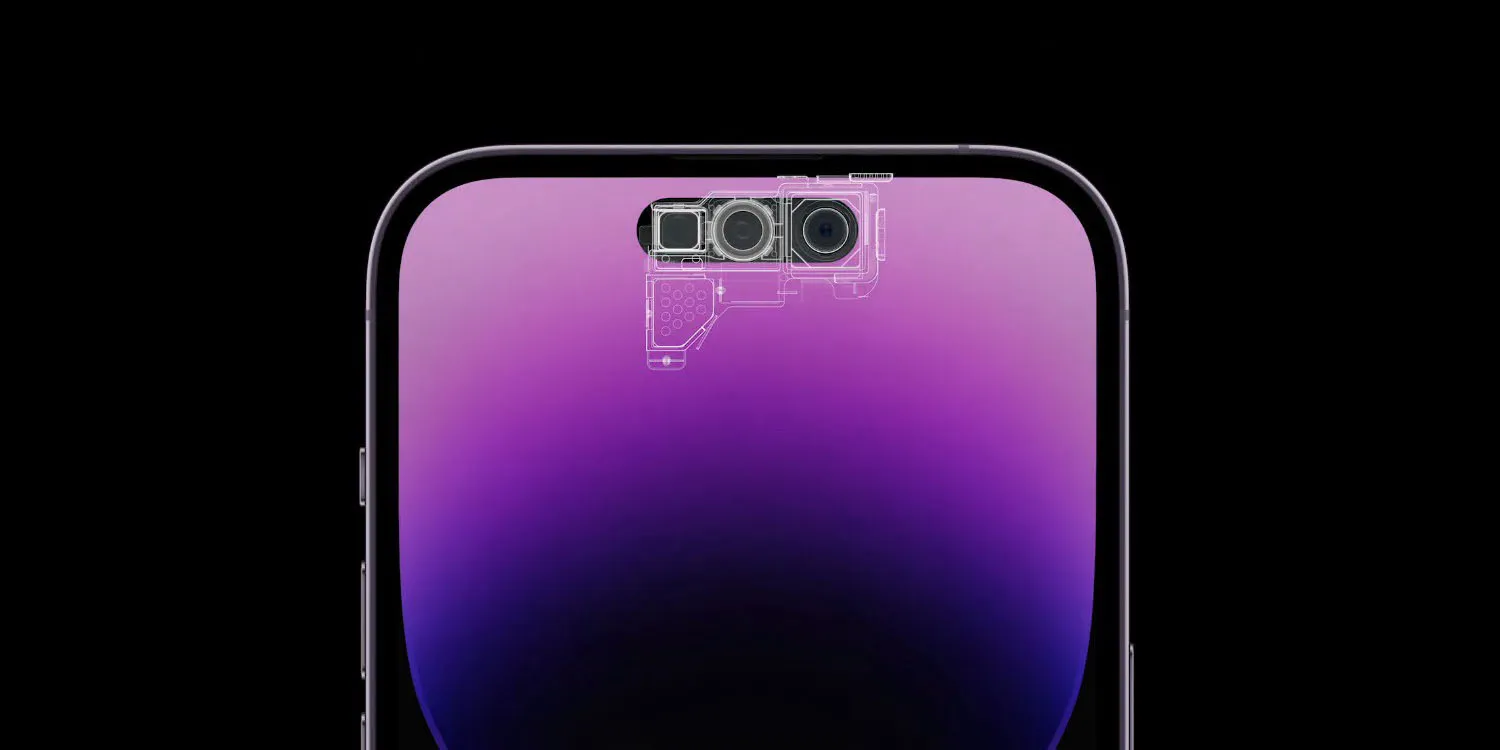
That contradiction has followed Apple’s flagship iPhones since the iPhone 14 Pro replaced the old notch in 2022. The software treatment was genuinely inventive: timers, music playback, incoming calls, AirDrop activity, Maps directions and Live Activities suddenly had somewhere to live without forcing users into an app. Yet the hardware problem never disappeared. A pill-shaped cutout was still a pill-shaped cutout.
Now Apple appears to be inching toward the next step: moving at least part of the Face ID system beneath the display.
The latest iPhone 18 Pro rumors don't paint a perfectly consistent picture, which is worth saying upfront. Some reporting has pointed to a design with under-display Face ID and only a small camera hole. Other well-connected display sources, including Ross Young, have instead suggested a smaller Dynamic Island because several components may remain visible. Recent reporting has even suggested Apple could encounter enough technical friction to make the change more incremental than early leaks implied.
So, could under-display Face ID finally remove the Dynamic Island?
Yes. Eventually.
But the more interesting question is how Apple gets there without making Face ID worse.
The Dynamic Island exists because Face ID hardware needs somewhere to see
The current Dynamic Island isn't just decorative software. It disguises physical hardware.
Apple's Face ID system relies on the TrueDepth camera system, which projects and analyzes thousands of invisible dots to build a depth map of a face while also capturing an infrared image. That biometric data is processed into a mathematical representation and compared against enrolled facial data using hardware protected by the Secure Enclave.
That is a lot more demanding than hiding a simple ambient-light sensor.
A traditional under-display front camera can tolerate some image compromises because computational photography can compensate for haze, reduced contrast, and light passing through display layers. Face ID has a different job. It has to authenticate you reliably and securely.
One badly behaved optical component can become a real user problem.
Think about the annoying cases that already happen with visible hardware: a smudged screen protector, a case edge creeping over the sensor area, sunglasses that interfere with infrared light, or a face mask positioned too high. Apple specifically advises users to keep the TrueDepth area unobstructed, and notes that certain sunglasses can block the infrared light Face ID uses.
Putting parts of that system behind OLED layers adds another engineering variable.
Not impossible. Just difficult.
Under-display Face ID doesn't necessarily mean a completely clean screen
This is where rumor headlines can get ahead of the technology.
A report from The Information previously suggested that the iPhone 18 Pro and iPhone 18 Pro Max could move toward under-screen Face ID while leaving only a small front-camera cutout. That would effectively eliminate the familiar centered black oval.
Ross Young's later comments pointed to a more conservative scenario: some Face ID hardware could move beneath the display, while visible components remain in a reduced Dynamic Island. Subsequent reporting in January 2026 suggested one possible arrangement in which only the IR flood illuminator moves under the display, while the dot projector, infrared camera, and selfie camera remain visible.
That distinction matters.
Possible design | What you would see | What it means |
|---|---|---|
Current iPhone approach | Full pill-shaped Dynamic Island | TrueDepth hardware remains visible |
Partial under-display Face ID | Smaller pill or redesigned cutout | Some sensors hidden, others exposed |
Under-display Face ID + visible selfie camera | Single hole-punch | Dynamic Island hardware requirement largely disappears |
Fully under-display TrueDepth + camera | No permanent cutout | A genuinely uninterrupted display |
The second option currently looks more plausible for the near term.
The fourth is the dream. Also the hardest one.
Why Apple may hide Face ID before hiding the selfie camera
The order sounds backwards at first.
You might assume Apple would hide the front camera first because people want a full-screen display. Yet an under-display camera has an obvious visual benchmark: take a selfie and inspect it. If image quality drops, people notice immediately. Skin can look washed out. Fine hair turns mushy. Bright windows behind the subject can expose flare and reduced dynamic range.
Face ID is different.
Users don't inspect the infrared image produced by the TrueDepth system. They care whether the iPhone unlocks quickly, whether Apple Pay authorizes properly, and whether the system remains secure.
Apple can theoretically hide certain infrared components without asking them to produce Instagram-ready photographs. That makes a staged transition technically logical, assuming the system can maintain enough optical performance through the display.
The challenge is that Face ID isn't one sensor doing one thing.
The TrueDepth system has multiple jobs, and Apple's implementation also supports attention-aware features. On supported Face ID devices, Attention Aware can prevent the display from dimming while you're looking at it and reduce alert volume when your attention is detected.
Remove or relocate hardware carelessly and the knock-on effects could extend beyond unlocking.
The iPhone 18 Pro may be the first visible step, not the finish line
Current reporting points repeatedly toward the 2026 Pro models as a likely testing ground for under-display Face ID technology, but Apple has not announced the hardware. Treat every exact implementation as a rumor until Cupertino puts the phone on a stage.
That caveat doesn't make the trend meaningless.
The evidence is converging around one broad idea: Apple wants less visible hardware at the top of the screen, even if the first generation only reduces the obstruction. Bloomberg reporting and Ross Young's comments have both supported the possibility of a smaller Dynamic Island, while competing reports have described a more dramatic move to a small camera hole.
The likely progression looks something like this:
Move selected Face ID components under the OLED panel.
Shrink or reshape the remaining visible cutout.
Eventually relocate the rest of the biometric system and, later, the front camera.
That last stage may take longer than enthusiasts expect.
Young previously suggested that fully moving Face ID components beneath the display could slip to around 2028 rather than arriving all at once with the first under-display implementation.
Apple has played this game before. The company rarely treats a major display or camera transition as an all-or-nothing switch if the first version would introduce obvious compromises.
A smaller island first? Very Apple.
What happens to the Dynamic Island software?
Here's the part that gets overlooked.
Removing the physical pill doesn't mean Apple has to kill Dynamic Island as an interface.
The Dynamic Island is now partly a hardware disguise and partly an iOS interaction model. Those two things no longer have to be welded together.
Imagine an iPhone with a tiny camera hole in the upper-left corner. iOS could still animate an incoming call, timer, sports score, or Live Activity from that corner. It could expand across the status area, then collapse back into a minimal indicator.
One January 2026 rumor described precisely this kind of possibility: under-screen Face ID paired with a top-left camera cutout, with the Dynamic Island software potentially moving and expanding from that corner rather than permanently occupying the center of the display.
That would actually solve an odd limitation of the current design.
Today, the Dynamic Island is always in the same place because the hardware is always there. If the hardware constraint disappears, Apple gains freedom to rethink the interaction. A floating notification area could appear only when needed. Live Activities could anchor closer to the relevant edge. The status bar might finally reclaim more of its original geometry.
Or Apple could keep the name and simply make the island appear on demand.
Not quite gone. More like liberated.
The real obstacle is optical physics, not software polish
Apple can animate around almost anything. Light is less cooperative.
An OLED display is made from layers that aren't naturally friendly to a precision optical system sitting underneath them. The panel has to display pixels while also allowing enough useful light—or, depending on the sensor, the relevant wavelengths—to reach components below. Pixel density, metal wiring, encapsulation, display uniformity and optical interference all become part of the engineering equation.
Then there's manufacturing consistency.
A prototype that works on one carefully tuned panel isn't enough. Apple ships at enormous scale. Every iPhone 18 Pro would need comparable biometric performance across different panel batches, temperatures, brightness levels and years of display aging.
That's where flashy concept renders become misleading.
The easy version is simple: hide everything.
The shipping version has to work when someone unlocks the phone half-awake, outdoors, wearing sunglasses, with the device 30 centimeters from their face and a slightly grimy screen protector installed.
Apple says Face ID is designed to work indoors, outdoors and in darkness, and recommends normal use within roughly 25–50 cm of the user's face.
Those expectations don't disappear just because the sensors become invisible.
A cleaner display could change more than aesthetics
The obvious benefit is immersion.
Watching a 16:9 video on an iPhone still leaves the Dynamic Island as a visible interruption when the content reaches the top of the panel. Games designed around edge-to-edge interfaces also have to accommodate the permanent cutout.
There are smaller wins too.
A reduced sensor opening could give Apple more freedom with status indicators and UI spacing. Developers building Live Activities could eventually work with a software-defined region rather than assuming a fixed black pill. Wallpapers and lock-screen photography would look cleaner.
But there's a trade-off.
The Dynamic Island has become recognizable. People understand it. Developers know where it is. Remove the physical anchor and Apple risks making transient information less discoverable.
The company would need to avoid one common mistake: replacing a visible, predictable control surface with a technically elegant animation that users forget exists.
Should you wait for an under-display Face ID iPhone?
Probably not just for that feature.
If you're holding an iPhone 14 Pro, 15 Pro, 16 Pro or newer model and the Dynamic Island genuinely bothers you every day, the next major redesign could be worth watching. But don't buy based on the assumption that the first under-display Face ID iPhone will deliver a flawless, notch-free, completely uninterrupted screen.
The latest rumor picture is messier.
A smaller Dynamic Island currently appears at least as plausible as its complete removal, and reports in 2026 have suggested that Apple may face delays or technical limitations in the transition.
That doesn't weaken the long-term direction. It just changes the timetable.
FAQ
Will the iPhone 18 Pro remove the Dynamic Island?
It might, but current reports conflict. Several sources expect under-display Face ID with a smaller Dynamic Island, while other reporting has suggested a design with only a small front-camera hole. Apple has not confirmed either approach.
How would under-display Face ID work?
Parts of the TrueDepth system would sit beneath specially engineered display areas and receive the optical information needed for authentication. Apple's existing Face ID system uses infrared imaging and thousands of projected invisible dots to build facial depth data.
Would under-display Face ID be less secure?
There's no reason to assume that Apple would intentionally reduce Face ID security. The bigger concern is reliability: under-display optical components must perform consistently enough to meet Apple's existing authentication expectations.
Could the front camera stay visible after Face ID goes under the screen?
Yes. In fact, that is one of the most plausible transitional designs. Apple could hide some or all Face ID hardware while leaving a conventional camera hole until under-display selfie quality reaches its standards.
Would the Dynamic Island disappear from iOS too?
Not necessarily. Apple could keep the Dynamic Island as a software concept for Live Activities and alerts even if the physical sensor cutout shrinks, moves, or disappears.
The smartest move now is to watch the hardware leaks closely, but focus on the distinction between under-display Face ID and a truly uninterrupted display. They're related milestones, not the same thing. The next iPhone Pro could shrink the island dramatically; the iPhone that removes every visible front-facing component may still be waiting a generation—or several—further down the road.
under-display Face ID
iPhone display news
smartphone innovations
Apple Face ID rumors
mobile technology trends
Found this helpful? Share it!